
Measure
Unibloom Data
Early accessTalk to us
Priced around your team and LCAs. First week free.
Get early accessThe data company for sustainable procurement
Unibloom takes you from “we should decarbonise” to “here’s what we need to do, what it cost, and what it saved.”




Measure Explore alternatives Act
01 · Measure
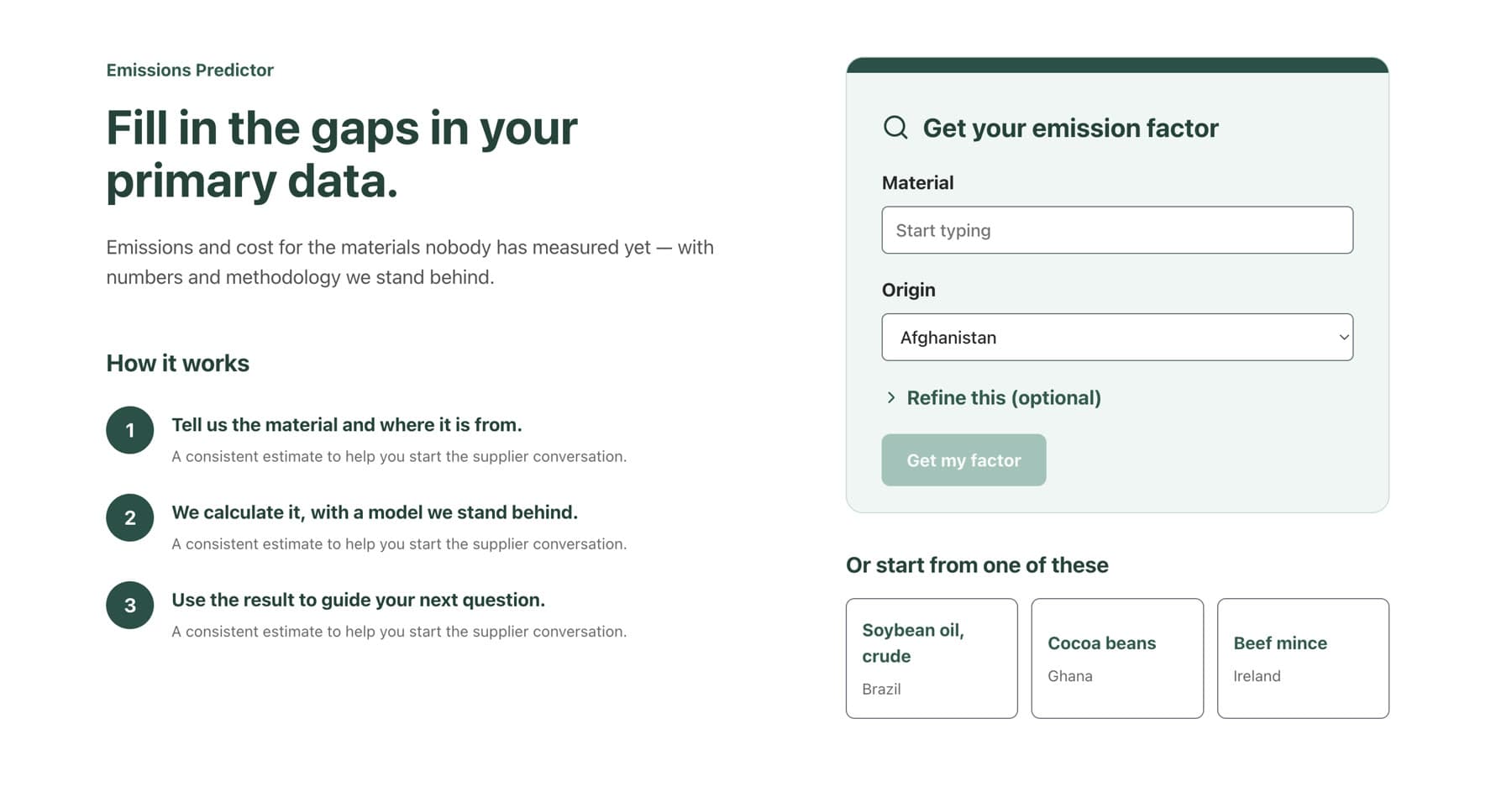
Fill in your missing data gaps with live data.
02 · Explore alternatives
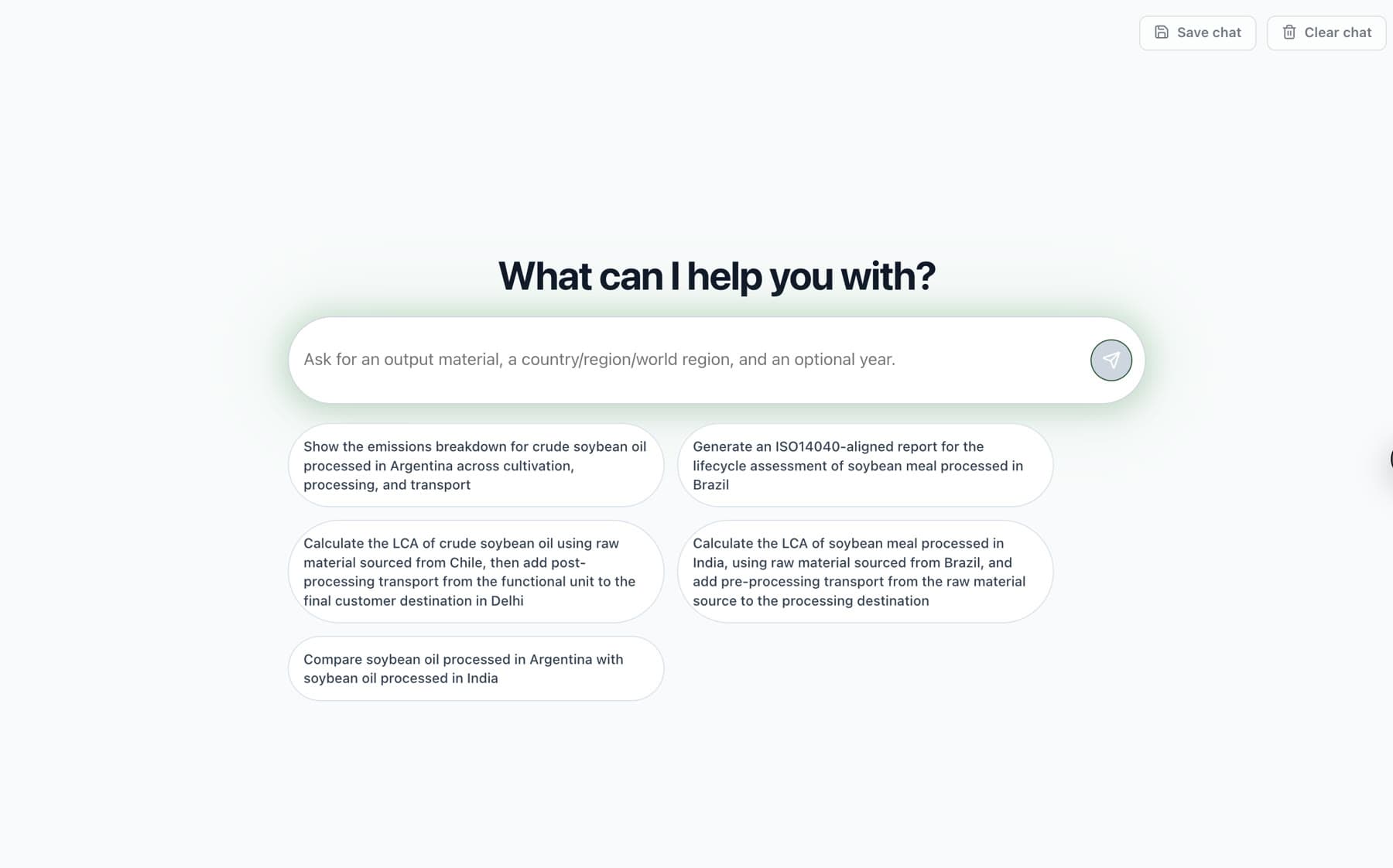
Find a more sustainable option before you switch.
Free to try · €500 per full analysis
03 · Act
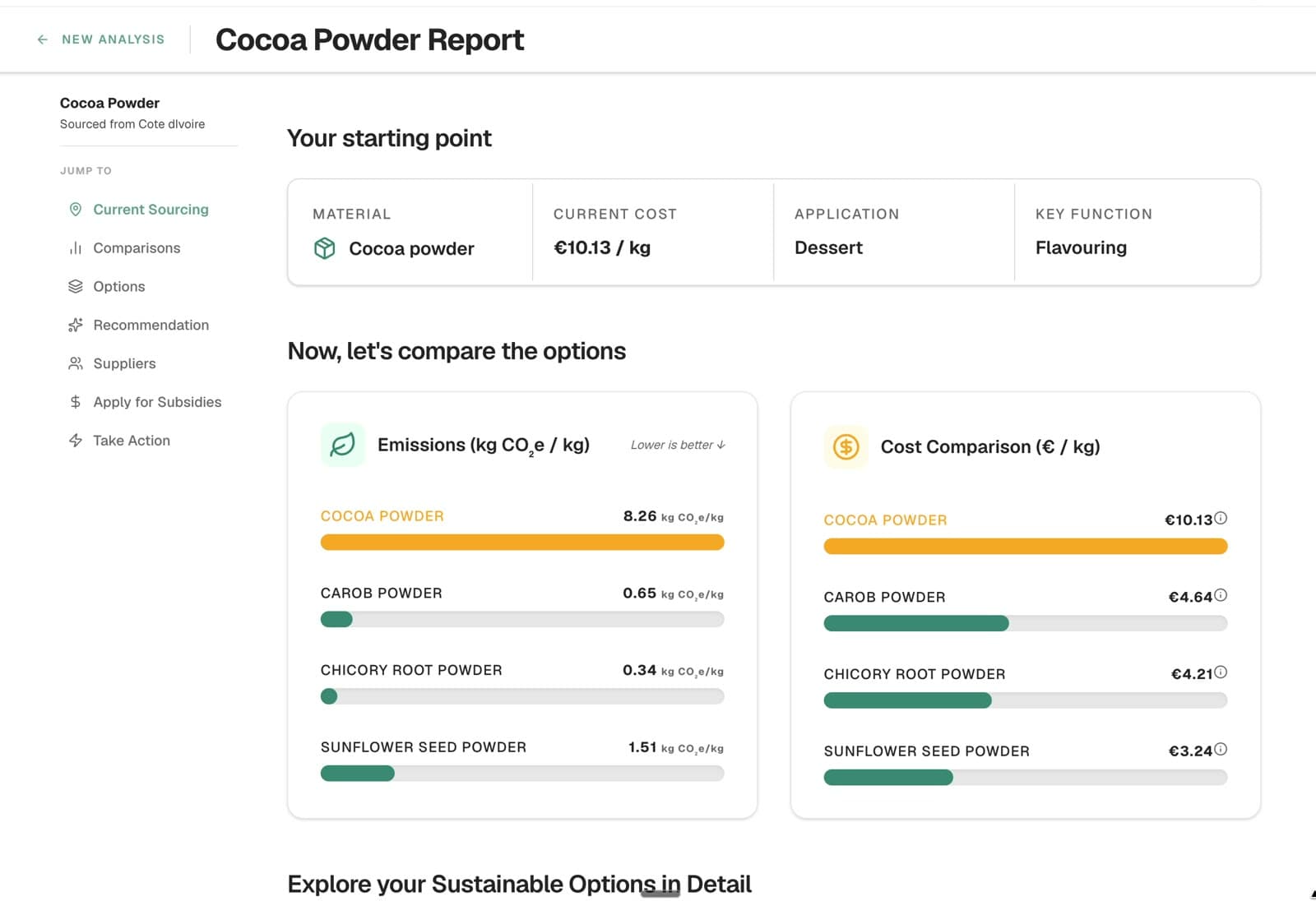
Build and act on the plan. See what it costs.
First month free, then €50 per user per month. No commitments. Cancel anytime.
You're 38,870 tCO₂e short of your target
Cut Scope 3 emissions by 30% · from 2019 baseline · 20% growth
“I could always tell them the number. I could never tell them what closing it would cost.”
Measure
Talk to us
Priced around your team and LCAs. First week free.
Get early accessExplore alternatives
€500 / analysis
Free to try first. Pay per analysis, no subscription.
Try Unibloom SwitchAct
€50 / user / month
First month free. No card. Pro €250, with product carbon footprints (PCF), coming soon.
Start your plan in 10 minutesSee full pricing · Need it for many teams or entities? Talk to us about Scale.
40%
potential emissions reduction identified
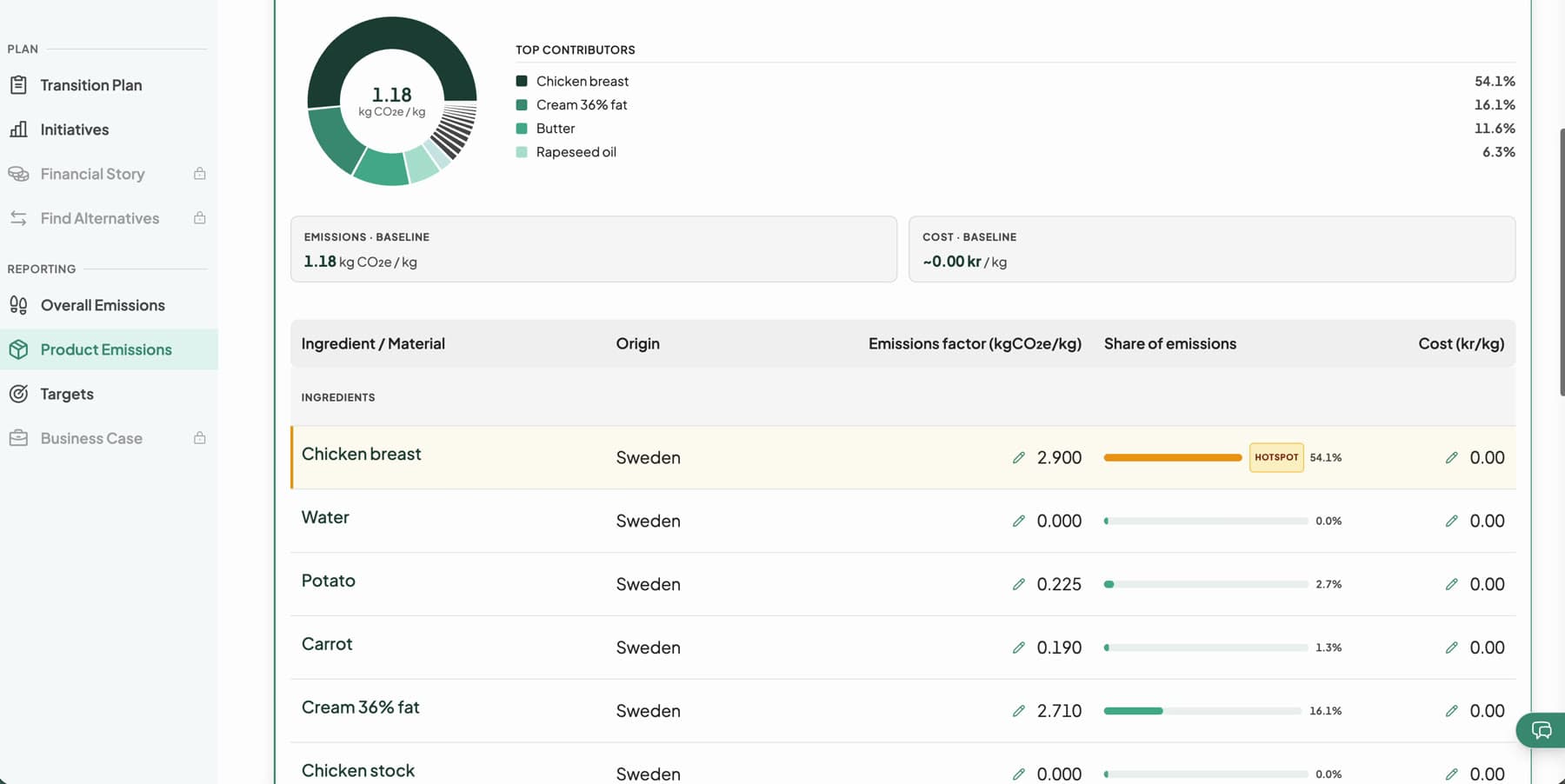
Unox (Unilever) used Unibloom to compare lower-carbon meat sourcing options, with carbon and cost side by side.
Customer voices
We had group ambition and baseline data, but each of our 10 companies needed its own starting point. Unibloom gave us both the structure and the data-backed alternatives to build company-specific, costed action plans. In two 55-minute online sessions, every company was engaged and left with clarity on what they own in 2026.
Angelica Pavlic Sustainability Lead · Bemsiq GroupJannica Sjöström CFO · Bemsiq Group
Unibloom is the data company for sustainable procurement. Unibloom helps sustainability, procurement and finance teams in food and consumer goods see what their products emit, compare lower-carbon alternatives and build a climate transition plan with carbon and cost on the same line.
A climate transition plan shows how a company gets from today's emissions to its climate target: which initiatives it will take, how much carbon each one cuts and what each one costs. The Unibloom Climate Transition Plan is the first one you build yourself, starting from the sustainability report you already have.
Scope 1 emissions come from things a company runs itself, Scope 2 from the energy it buys, and Scope 3 from its supply chain, as defined by the GHG Protocol. For food and consumer goods companies, Scope 3 is usually by far the largest share, which is why supplier and ingredient choices matter most.
FLAG emissions are emissions from Forest, Land and Agriculture: land-use change, farming and land management. SBTi FLAG guidance asks companies with large land-based emissions, such as food and agriculture companies, to set separate FLAG targets. Unibloom's data covers ingredients by country of origin, which FLAG calculations depend on.
CSRD, the EU Corporate Sustainability Reporting Directive, requires large companies to report on sustainability using the ESRS standards. The climate standard, ESRS E1, asks companies to disclose their transition plan for climate change mitigation, or say they have none. Unibloom helps you build that plan; your reporting tool handles the report.
An SBTi transition plan starts from your baseline emissions and a science-based target, adds expected business growth, then lists the initiatives that close the gap with the carbon and cost of each. In Unibloom you upload your report, check your baseline and gap, and add initiatives, usually within minutes for a first plan.
Yes. Both need the same groundwork: measure your emissions, set a target and show a credible plan to reach it, which the new B Corp standards from 2026 make part of certification. In Unibloom you see your baseline and your gap to the target, then add the initiatives that close it, with the carbon and cost of each. Unibloom is itself a certified B Corp with an SBTi commitment.
The best Scope 3 software for food and consumer goods companies covers ingredients and materials by sourcing country and shows what each reduction costs, not only the tonnes. Unibloom was built for these sectors: country-specific emission factors, lower-carbon alternatives in Unibloom Switch, and a transition plan from €50 per user a month.
No, Unibloom is a data and software company, not a consultancy. Our scientists built the data: emission and cost figures calculated with established life-cycle assessment methods and predictive modelling, using published and openly licensed emission-factor data. Your team runs the analysis in Unibloom's tools, so you don't need to hire scientists or consultants.
Yes. Unibloom has teamed up with 2050 Consulting, so you can add expert support to your Unibloom Climate Transition Plan whenever you need it. Your team builds and runs the plan in Unibloom on its own, and 2050 Consulting is there when you want experts alongside you.
A general AI chatbot writes an answer; Unibloom calculates one. Unibloom's numbers combine established life-cycle assessment methods with predictive modelling, developed using published and openly licensed emission-factor data, and every source, assumption and estimate stays traceable.
Keep your carbon accounting tool for reporting, and use Unibloom to decide what to do next, what to prioritise and how each initiative affects your carbon and cost together. That helps you build a business case that actually gets management approval. Your carbon accounting tool tells you what you emitted; Unibloom shows what to do about it.
Yes, you can start Unibloom with incomplete Scope 3 data: gaps are filled with estimated data, with the assumptions and confidence scores visible. Start with the data you have, even before suppliers share theirs, and replace each estimate the day real supplier data arrives.
In Unibloom, a first climate transition plan takes minutes. Upload the sustainability report you already have, pick your baseline year and target, and Unibloom shows your gap. Then add initiatives with the carbon and cost of each.
Unibloom combines established life-cycle assessment methods with environmental data and predictive modelling. Our models are developed using published and openly licensed emission-factor data together with contextual information such as material type, geography, life-cycle stage and relevant physical emission drivers. Sources, assumptions and estimated values are kept traceable so users can understand the basis of the result.
Yes. Unibloom's supply chain emissions data is available on the SAP Store, so SAP customers can bring granular, country-specific Scope 3 data into their SAP sustainability processes.
The cost of climate inaction is what a company loses by waiting: carbon prices and levies, customers and lenders that expect a credible plan, and reductions that get more expensive later. Unibloom Climate Transition Plan Pro shows the cost of inaction next to the cost of each initiative, so finance can compare both.
The Unibloom Climate Transition Plan costs €50 per user per month on Starter, and Pro at €250 is coming soon. First month free. Unibloom Data is priced around your team and the LCAs you need, so talk to us; the first week is free. Unibloom Switch is free to try, then €500 per analysis.